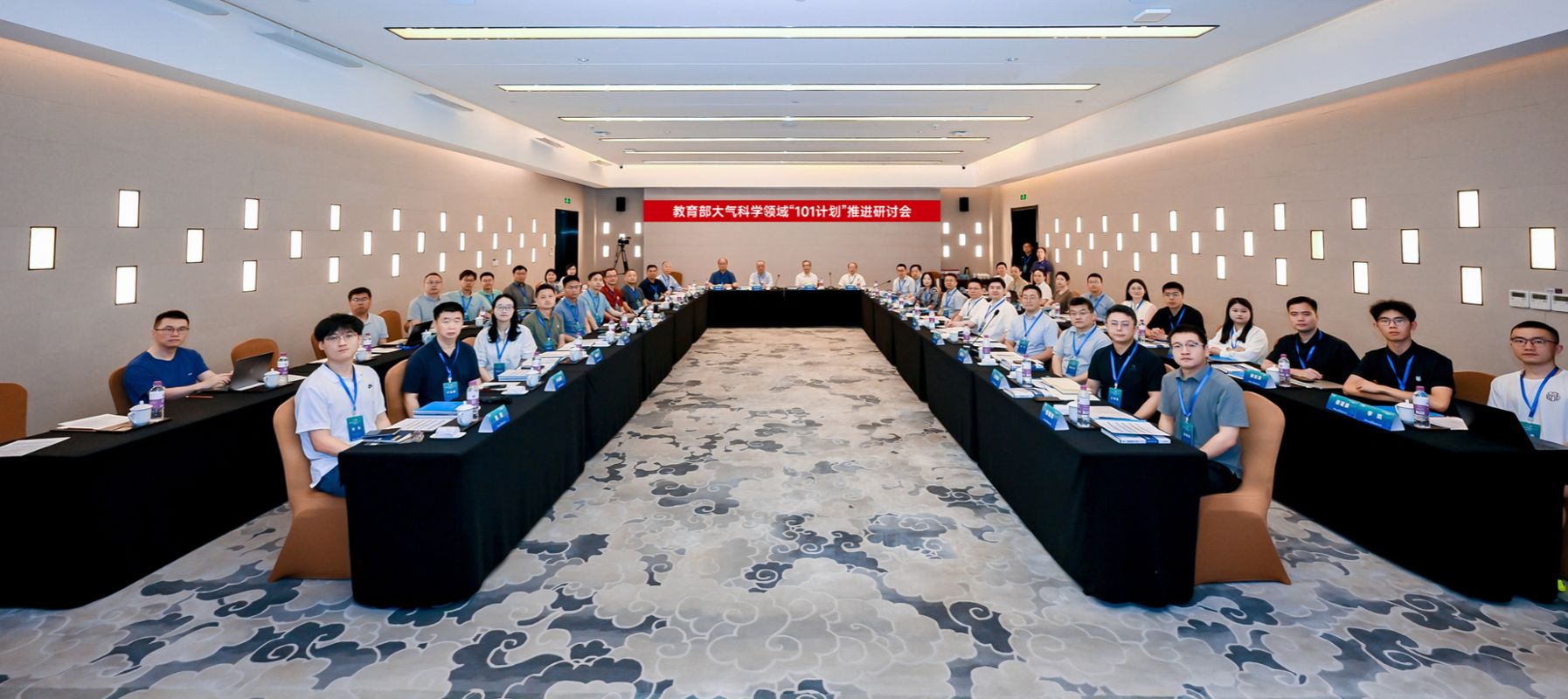
On August 3, 2026, the progress meeting on Ministry of Education's "101 Plan" for Atmospheric Sciences was held at the Xianlin Campus of Nanjing University. Attending the meeting were Tan Zheming, President of Nanjing University and Academician of the Chinese Academy of Sciences, and leader of the "101 Plan" for Atmospheric Sciences; Zhang Renhe, Academician of the CAS and professor at Fudan University; He Jianxin, President of Chengdu University of Information Technology; and Hu Yongyun, professor at Peking University.
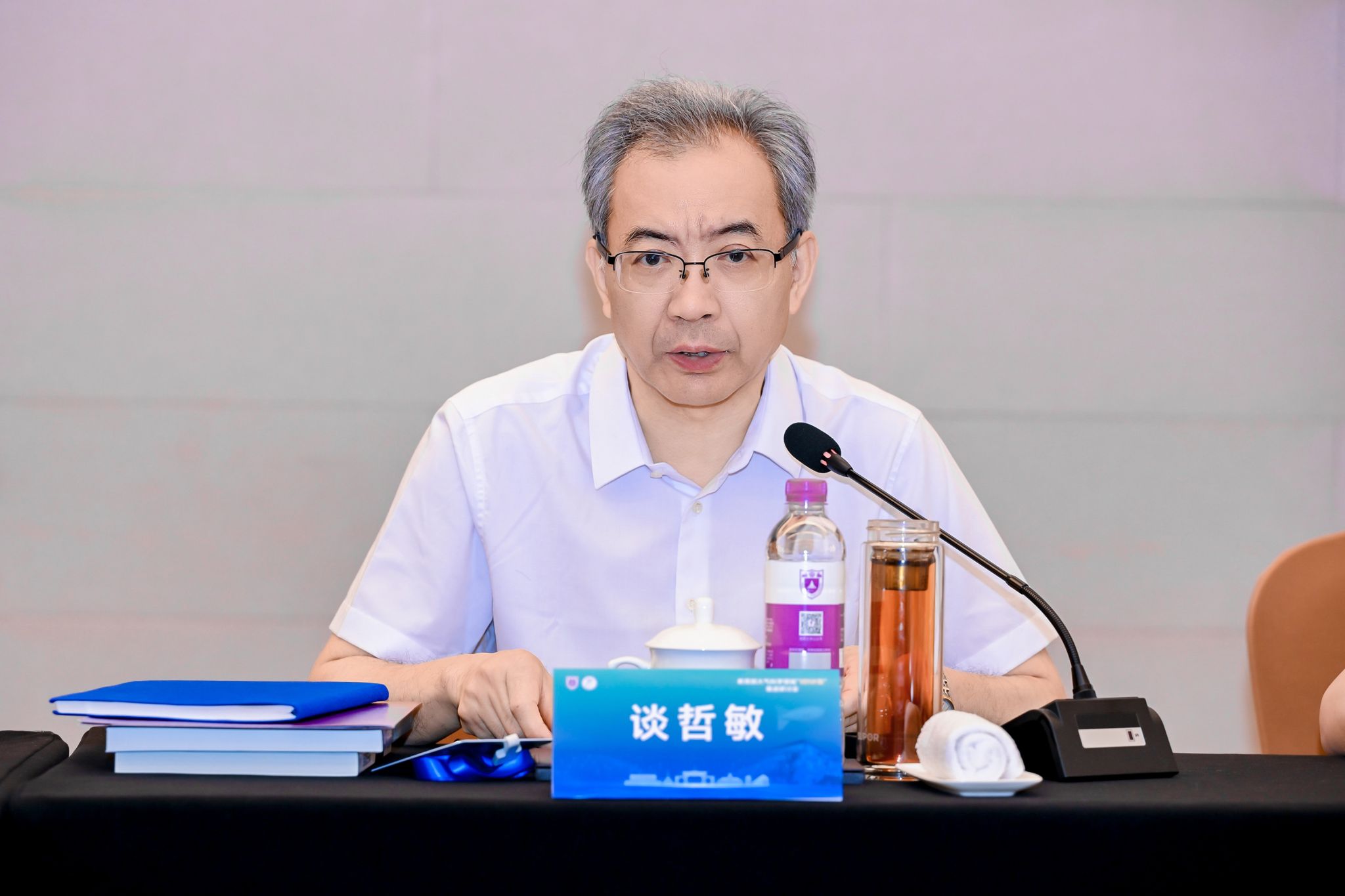
In his speech, Tan Zheming expressed sincere gratitude to the members of the expert group, various course teams, and contributors such as the Higher Education Press for their hard work and dedication. He reviewed the progress made since the mid-term promotion meeting on January 18 of this year. He pointed out that the "101 Plan" is a systematic reform project for undergraduate education and teaching and emphasized the need to deeply understand this systematic reform initiative, which focuses on advancing the training of talent, especially undergraduates, through breakthroughs in four core aspects: courses, teaching materials, faculty, and practice. He stressed the importance of implementing General Secretary Xi Jinping's key speech on strengthening basic research, actively exploring new models of education and teaching reform powered by artificial intelligence, promoting the integration of knowledge graphs, discipline-specific large models, and intelligent teaching tools into talent training, and collaboratively building the "101 Plan" for Atmospheric Sciences into a key demonstration of education reform in basic disciplines.
The seminar was chaired by Zhao Kun, Dean of the School of Atmospheric Sciences at NJU, while Vice Dean Huang Danqing, representing the Secretariat of the "101 Plan" for Atmospheric Sciences, detailed key milestone requirements of the plan. This included clarifying the crucial milestones for the development of core teaching materials, intelligent courses, practice projects, and faculty teams.
The discussions focused on the progress and challenges encountered in implementing the four core tasks since the launch of the "101 Plan" for Atmospheric Sciences. Experts and faculty representatives at the meeting had in-depth discussions about major tasks, including the development of core teaching materials, intelligent course innovation, enhancement of the practical teaching system, and faculty team building. Constructive suggestions were made regarding a strategic research report framework, pathways for development, and implementation plans for the cultivation of talent in atmospheric science within higher education institutions. This meeting clarified the bottleneck issues encountered during the implementation of the plan and provided a solid foundation for its high-quality advancement in the field of atmospheric science.
Spearheaded by Nanjing University in collaboration with 28 other colleges and research institutes, Ministry of Education's "101 Plan" for Atmospheric Sciences officially commenced in October 2024. Since its launch, significant work has been carried out across four key innovative reform areas: core teaching materials, intelligent course reforms, faculty team building, and practice projects. By focusing on these areas, the plan addresses challenges in cultivating talent in the foundational discipline of atmospheric science in the new era, promoting the high-quality development of talent in this field and supporting China's technological self-reliance and strength at a high level.
Over 40 experts and scholars, including core course leaders and key members of the "101 Plan" for Atmospheric Sciences, representatives of the Higher Education Press, Wisdom Tree Network, and NJU's Office of Undergraduate Affairs, participated in the meeting.